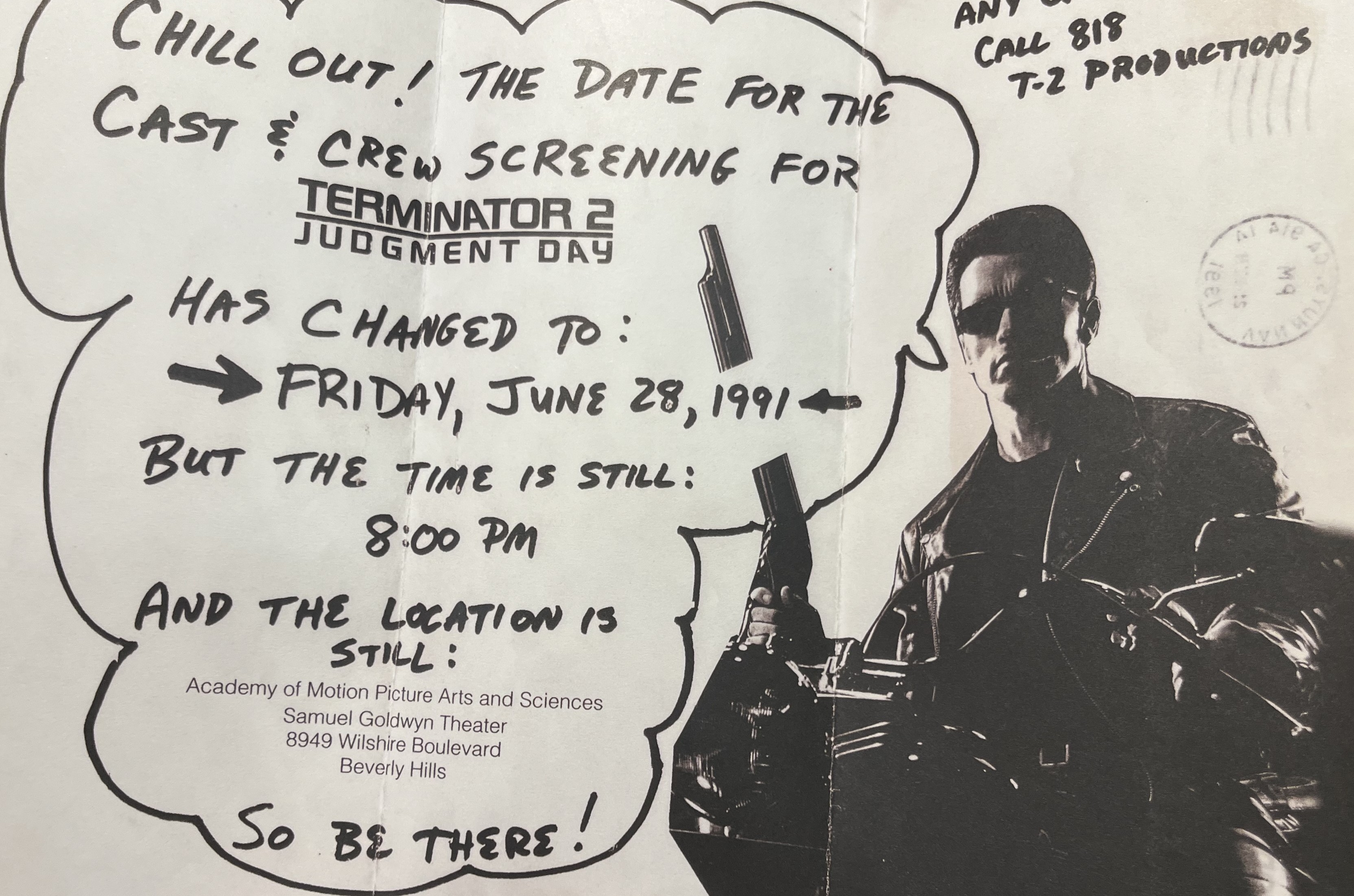
Long read: What can Terminator teach us about AI?

Like a blast from the past, The Terminator still warns of the dangers posed by an artificial intelligence. In the future of 2029, Skynet, a self-aware defence network, realises that it is facing extinction. In a last, desperate bid to erase the resistance, a cybernetic assassin is sent back to 1984 to kill John Connor’s mother, Sarah. In response, the resistance sends Kyle Reese—a human soldier plagued by nightmares—to protect her. Kyle dies but she ultimately saves herself by destroying the Terminator. Sarah later learns she is pregnant with John and goes off the grid training him, fulfilling a closed time loop that sets off the franchise.
This year, I watched Hiroshi Takahashi’s Japanese film Ring for the first time, struck by the haunting embrace between Reiko Asakawa and the skeleton of her tormentor, Sadako Yamamura. Curious, I asked an AI chatbot to estimate the T-800’s damages—it returned around $100 million, including lawsuits. Could we be underestimating how damning our relationship with technology has become?
Technology is transforming the rules of business across nearly every sector. By 2006, a third of all EU stock trades were driven by automated programs, and on the London Stock Exchange, over 40% of all orders that year relied on algorithmic trading. Whilst AI remains a major focus for investors worldwide, record high valuations in startups have led some new agencies to cite bubble trouble. The MSN messaging era brought $99 billion in losses during the .com bubble between corporate giants AOL and Time Warner. Fast forward to Monday, Nvidia suffered the largest single-day loss in U.S. market history, triggered by competing AI app DeepSeek.
In 2020, YITU secured 2.567 billion CNY in financing, even while carrying an accumulated loss of 7.2 billion CNY. Outside of funding rounds, superintelligence can still reach a cognitive red light. In the same year, IBM, Amazon, and Microsoft halted sales of facial recognition technology to police following warnings from human rights groups over racial discrimination. Persistent gender bias in AI and STEM continues to influence how systems are designed, often sidelining women’s contributions and increasing the risk of job displacement. The ecological cost is also quite prevalent as training a single large model like GPT-3 can emit up to 500 metric tons of carbon dioxide (CO2). Whilst AI seems to be blamed for a rise in thousands of lay-offs.
So, what technological paranoia are you feeling today? James Cameron wanted to explore how humans can become inhuman—but AI can feel a lot like a red flag...with no hydraulic press machine in sight.
CREDITS
- Valls, A. and Gibert, K. (2022). Women in Artificial Intelligence. Applied Sciences, 12(19), p.9639. doi:https://doi.org/10.3390/app12199639.
- Whittaker, N. (2000). The Terminator. York Notes.
- Nathan, I. and Schwarzenegger, A. (2013). Terminator vault : the complete story behind the making of the Terminator and Terminator 2: Judgment day. London: Aurum.
- Schulte, P., Sun, D. and Shemakov, R. (2021). Digital Transformation Of Property In Greater China, The: Finance, 5g, Ai, And Blockchain. World Scientific.
- Climate Impact Partners (2025). The Carbon Footprint of AI. [online] Climateimpact.com. Available at: https://www.climateimpact.com/news-insights/insights/carbon-footprint-of-ai/.
- Crockford, K. (2020). How is Face Recognition Surveillance Technology Racist? [online] American Civil Liberties Union. Available at: https://www.aclu.org/news/privacy-technology/how-is-face-recognition-surveillance-technology-racist.
- Moyo, D. (2021). How Boards Work. Basic Books.
ARCHIVES